Archive for Reviews

mécASTROnic: Astronomy Cameras Now With USB 2.0

mécASTROnic, one our French resellers, has recently published a short announcement and review of the new USB 2.0 astronomy cameras. The text has been translated from French into English for our global audience.

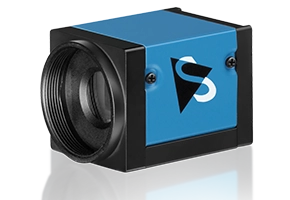
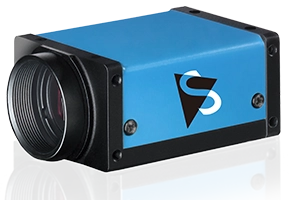
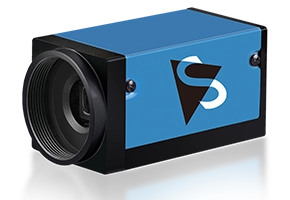
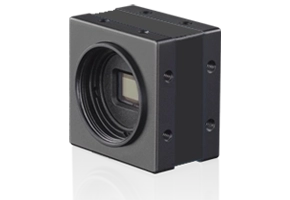
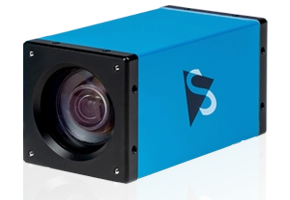
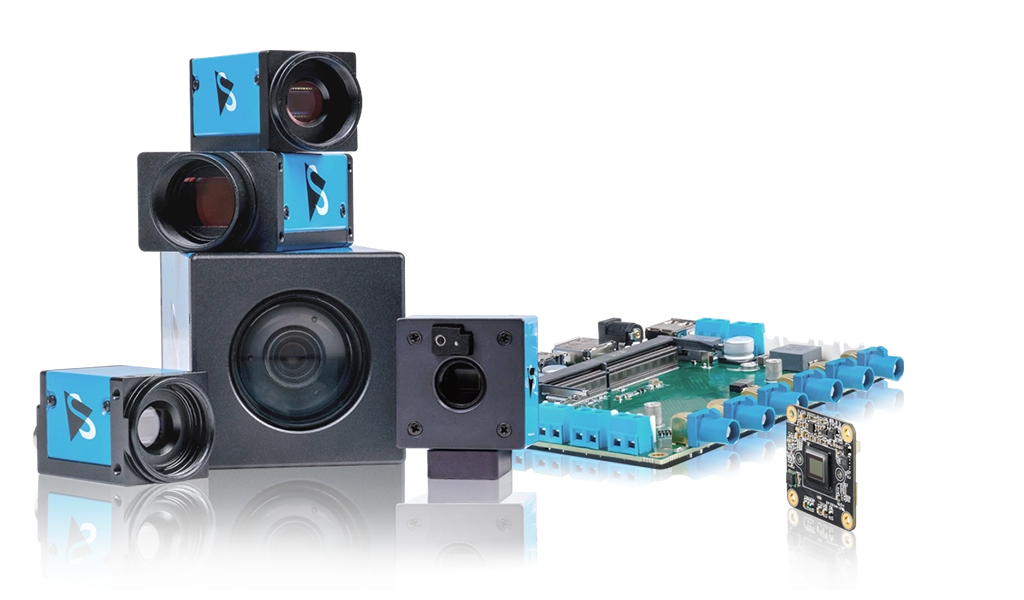
The CCD cameras from The Imaging Source are now available with USB 2.0 connectors. These new cameras are in addition to their current range of FireWire cameras. These cameras perform very well and are known in the amateur astronomy community for their great image quality (especially for planetary imaging). They are also well suited for deep sky imaging despite their 8 bit digitization and lack of cooling. The cameras ship with monochrome and color CCDs from Sony and resolutions of 640×480, 1024×768 and 1280×960. Without an IR cut filter, the cameras are highly sensitive to light throughout the spectrum. They output up to 60 non-compressed frames per second and can be exposed for up to sixty minutes. The cameras ship with camera control and acquisition software, a USB cable and telescope adapter (31.75 mm).

For our French-speaking customers, the mécASTROnic web site offers a great deal of detailed information about The Imaging Source astronomy cameras.

Comments

AstroShop.de: Planetary and Deep Sky Imaging

AstroShop.de, one of our German resellers, has published the following short review of The Imaging Source astronomy cameras. The text has been translated from German into English for our global audience.

Planetary and Deep Sky Imaging With Highly Sensitive Video Cameras

One of the main problems with the range of web cams from Philips is that they only allow a limited amount of data to be transferred from the camera to host PC. Alternative cameras are available from Mintron, Watec and The Imaging Source, with their DMK range.

The DMK cameras are available with a number of chip sizes and resolutions. The DMK 21AF04 have already acquired a very good reputation for planetary imaging. This monochrome camera outputs sixty images per second with a dynamic range of 10 bit (digitization 8 bit).

In terms of sensitivity and noise, The Imaging Source astronomy cameras are far superior to web cams. This is due to better control of the chip and lack of a color filter. Color web cams have a filter in front of each pixel. This only allows red, green, blue through (quarter of the light). Only monochrome cameras take advantage of the full sensitivity of the chip.

The resolution of the DMK 21AF04 is limited to 640×480. This, however, is more than sufficient for planetary imaging. There are also some models with 1024×768 and 1280×960 resolution, which are of interest to astro-photographers who wish to capture Moon and Sun images.

The DMK cameras ship with a FireWire [and USB] connector [...] Furthermore, the camera driver IC WDM DCAM TIS and camera control software IC Capture.AS are included. Image data from the camera is not compressed: each image is in RAW format. In addition to the shipped software, it is also possible to use applications such as Virtual-Dub or Giotto with the cameras.

Post capture image processing is performed in a manor similar to with web cams.

The original page, which is in German, also offers a number of sample images.

Comments

Commentary On DBK 21AF04.AS From Perth, Australia

I have just come across the following post in the My Astro Space Astronomy Video Astrophotography, Webcam forum:

Gday, thought I would post some commentary on a new camera that I purchased in the last week, a DBK 21AF04.AS from the Imaging source company . Before finally settling on the model brought I was in two minds whether to go for the monochrome version {DMK} which would require filters/filterwheel {more funds} and whether to go for the Firewire or USB connection. Finally settled on the DBK with Firewire, it was tough choice seeing all the fine work done by people with the DMK but to add the filters exceeded my budget.

Been out nearly every morning since getting the camera hoping to catch Mars but the seeing has been woeful for the last week. Even with a 20mm eyepiece through the C9.25 SCT I use its hard to distinguish any features on Mars except for faint hints of albedo surface features. First light with camera was with a nearly full moon whilst setting up for Mars, watching the live feed of the lunar surface first thoughts coming to mind was Wow. Even though the seeing was poor and I wasn’t using a barlow just the native FL of the C9.25 I could tell the camera is a step above the Toucam/900CNC I used.

The DBK has the ability to capture frames up to 60fps using different video formats and codecs {still getting my head around all the different methods} and with the right combination a AVI can be taken in raw and uncompressed mode. Anyway I’m looking forward to using the cam and the potential it may provide, here’s some pics from first light… not great but a start and also a reminder that seeing conditions is king no matter what gear you use.

PS: the capture software that comes with the camera is very good and easy to use.

PSS: added a pic of M42 with a new flattener/reducer I received for my little apo refractor, hooray no more coma/curvature.

To the original post, Beren has attached some stunning sample images. Below are some of the most spectacular:

Our warmest thanks go out to Beren for spending the time to post these images into the forum! Keep up the good work!

Comments (1)

Bob Pilz and His Lunar Marvels

I have very recently become aware of a premier lunar imager that has been working in our back yard for quite a few years using The Imaging Source cameras. Bob Pilz, who is based in Asheville, NC, USA, has a tremendous portfolio in his galleries and great things to say about his DMK 21AF04. He recently wrote me:

I have been using a DMK 21BF04 for over the last two years to take lunar images. Its low noise, high sensitivity, and excellent capture software have made it a real pleasure to use. It has produced excellent results and is definitely a “best buy” in astronomical imaging systems.

You can see some of the images taken with my 8″ f/6 Newtonian here:
http://www.pbase.com/bob_p/moon_8_telescope

Thanks for a great product.

Your welcome and we welcome any and all feedback (especially the good stuff) from our users regarding astronomy cameras from The Imaging Source. Kudos to Bob and the work done!

Comments

Wolfgang Paech Reports From Rooisand Desert Ranch, Namibia

We have recently received a report from Wolfgang Paech on his trip to Rooisand Desert Ranch in Namibia. The original report, which he submitted in German, can be downloaded as a PDF file. Below is a translation into English for our world-wide audience:

In the Summer of 2007, I have the great opportunity of spending three months observing at the Rooisand Desert Ranch in Namibia.

With me were two cameras, manufactured by The Imaging Source, namely one DMK 31AF03.AS and one DBK 21AF04.AS.

Using the telescopes at the Rooisand Desert Ranch I was able to capture approaching one terabyte of raw video data. I captured Venus, Saturn, Jupiter, the Moon and several deep sky objects with the camera control software IC Capture.AS.

During my entire stay at the ranch the operating system did not crash once, nor were there any problems or bugs in IC Capture.AS. The camera control software is very simple to use. Furthermore, both cameras fell from a height of around one meter onto the hard, concrete floor of the observatory. Both cameras survived the fall completely unscathed. The right angle orientation of the CCD chip to the camera mount also remained unchanged.

The cameras, from a mechanical and electronic point of view, and the camera control software IC Capture.AS are - in my opinion - perfectly developed mass market products. They are ideal for amateur astronomers who are looking to start out in astro-imaging and who immediately want to achieve professional looking results.

I have included (see below) a composite image of post-acquisition processed images of Jupiter. They were captured over a period of three months. All raw data were captured with the DBK 21AF04.AS, using automatic white balance. Post processing was in Photoshop, in which a moderate color correction was performed in order to normalize the color differences between the singular images.

Comments

« Previous entries